How Do the Simple Acts of Hajj Transform into Profound Faith Lessons?
How Do the Simple Acts of Hajj Transform into Profound Faith Lessons?
Hajj is not just a physical act of worship, but a comprehensive journey of the soul, mind, and self towards Allah. Every ritual of Hajj carries deep spiritual meanings, and here are some of them:
🔹 Ihram (The Sacred State)
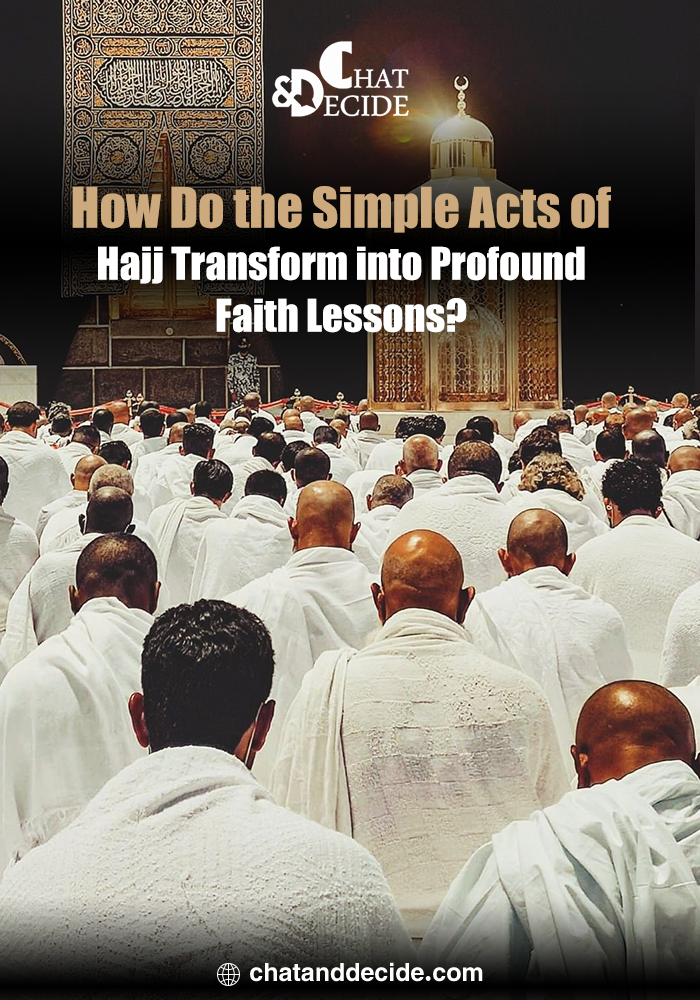
Hajj begins with wearing a simple white garment, in which no one is distinguished from another. It is a symbolic declaration that we are equal before Allah, with no difference between the rich and poor, the strong and the weak. It is a moment when a person sheds everything that ties them to superficialities, preparing themselves to stand before the Creator.
🔹 Tawaf (Circumambulating the Kaaba)
Pilgrims circle the House of Allah seven times, in a circular motion that reflects that Allah is the center of life, and everything in this world revolves around Him. This act expresses belonging and submission to Allah alone.
🔹 Sa’i (Walking Between Safa and Marwah)
Here, the Muslim recalls the story of a great mother, who hurried between two mountains in search of water for her child. It is a symbol of trust in Allah and striving with reliance. In every step, the pilgrim learns that faith is not just about waiting, but about striving with all that one can, leaving the outcomes to Allah.
🔹 Standing at Arafat
It is the heart and soul of Hajj. Millions of people stand in one place, stripped of everything, weeping, praying, seeking forgiveness. It is an honest stand with the self, a sincere repentance to Allah, a reminder of the Day of Judgment when people will gather to stand before their Lord.
🔹 Stoning of the Jamarat
It symbolizes rejecting the whispers of Satan and triumphing over one’s desires. The pilgrim throws the pebbles as Prophet Ibrahim (Abraham) did when Satan tried to prevent him from obeying Allah.
🔹 Slaughtering the Sacrifice (Udhiyah)
In this step, the pilgrim offers a sacrifice, following the tradition of Prophet Ibrahim when his son was replaced by a ram from the heavens, symbolizing obedience and drawing closer to Allah. It is a reminder that faith in Allah is not just words, but action and sacrifice.